Monday, March 6, 2017

Don’t Let Dental Anxiety Keep You From A Healthy Smile

HAS IT BEEN A WHILE since you visited the dentist? Does anxiety or worry about discomfort account for your absence? If fear is preventing you from enjoying the health benefits of regular dental appointments, here’s our plea: give us a chance to change your mind!

Let Us Help You Stop The Cycle

Far too many of us get caught in a terrible cycle. Out of fear, we procrastinate dental visits until tooth pain or discomfort is severe. That procrastination results in tooth decay or gum disease. Faced with the prospect of restorative treatment, we once again avoid care, which leads to further decay and disease.

Wouldn’t it be nice to have simple, easy checkups—and dental health peace of mind after each visit?

We’ve worked successfully to restore the health of many anxious patients, and we can help you too!

At Our Practice, We Prioritize Your Comfort

We offer Nitrous Oxide and IV Sedation for your appointments that can be a great option for anxiety. We also have Netflix to watch or an I-Pod loaded with a variety of music to listen to during your appointment that are tools that help calm nerves.

Try Transferring Your Anxiety Somewhere Else!


Hey, it could help! If worrying about things is just part of your nature, try taking all that worrying and transferring it to things that make more sense to worry about. Use this video as practice.

Find Your Happy Place At Our Dental Office

We know it may sound too simple to be true, but we believe that you should enjoy your visits with us! We’ll work with you and plan a way to make you comfortable with your dental care. Give us a call, or share this message with a friend.

Thanks for trusting our practice with your dental needs.

*Image by Flickr user Holly Lay used under Creative Commons Attribution-ShareAlike 4.0 license. Image cropped and modified from original.


Monday, February 6, 2017

Protect Your Child From Baby Bottle Tooth Decay

DO YOU EVER put your baby to bed with a bottle? It may seem harmless. But if the bottle is full of milk or juice, it may begin to erode their teeth.

Acid-Producing Bacteria Cause Baby Bottle Tooth Decay

Baby bottles full of milk or juice are also full of sugars that combine with bacteria to produce acids. When a baby drifts off with a bottle still in his or her mouth, the fluid pools around teeth and slowly erodes the enamel throughout the night.

The result can be painful tooth decay—also known as caries—and/or the need for crowns or extractions. In addition, since children’s teeth are still coming in they’re more susceptible to decay beneath the gum line. This decay can become so severe that delicate surgery under a general anesthetic is sometimes required to remedy the problem.

Protect Your Child’s Teeth From The Start

Give your child’s teeth the best protection you can, from the start! Dental health habits should begin before your child even grows their full set of baby teeth.

Baby teeth may be temporary, but they’re essential for your child’s health and development. They help your child eat and learn to speak. They also play an important role in guiding permanent teeth as they grow in properly.

We’re Here To Help

We’re here to help you help your child during this important time of life. If you have any questions about your child’s dental health, please send them our way. You can give us a call or reach out to us on Facebook! We’re excited to join forces to make sure your child has excellent oral health.


We appreciate your trust in our practice!

*Image by Flickr user Zhao ! used under Creative Commons Attribution-ShareAlike 4.0 license. Image cropped and modified from original.

Monday, January 9, 2017

Our Hidden Superpower: Smiling!

SMILING AT SOMEONE can turn their whole day around. But have you ever thought about the impact the act of smiling has on YOU? Smiling is a hidden superpower that can change our lives for the better if we let it!

Smiling Has Numerous Health Benefits

Did you know that frequent smiling can actually make us healthier? Smiling reduces stress and increases health and mood enhancing hormone levels, such as endorphins. Smiling also helps to lower our blood pressure.

Perhaps even more surprising, smiling can extend our lifespan! A study conducted at Wayne State University in 2010 found that baseball players who smiled in their pictures lived seven years longer on average than those who weren’t smiling in their photos.

Smiling Makes Us Happy

While we generally think of smiling as the result of feeling happy, smiling, even when we don’t feel like it, can actually improve our mood and emotional disposition. In other words, pasting a smile on your face, even if you’re faking it, can make you feel happier!

Here’s why: when we cause our facial muscles to form a smile, our brain’s circuitry of emotion and happiness is activated—whether the smile is genuine or not! A study conducted in the UK found that one smile can provide the same level of brain stimulation as up to 2,000 chocolate bars. What’s more, a smile can be as neurologically stimulating to your brain as receiving $25,000!

Smiling Helps Us Connect With People

One of our most primal instincts as human beings is to smile. Part of the joy of being around a newborn child is seeing them smile! Before they start smiling in the waking hours, they smile involuntarily in their sleep. 3-D ultrasounds show that developing babies even smile in the womb. Simply put, we’ve been smiling since before we were born!

And as it turns out, smiling is absolutely contagious! When we see another smile, it’s pretty hard not to smile ourselves. If you or I observe another person’s smile, mirror neurons will fire in our brain, giving us the sensation that we ourselves are smiling. So, smiling not only makes you feel good, but everyone around you as well!

We Love Your Smile!

Smiling has the power to get you through the good times and the bad! As your trusted dental professionals, we’re here to help you maintain a healthy, beautiful smile so that it can brighten your life and the lives of others. Remember, when in doubt, smile!

Thank you to our wonderful patients! We appreciate you!


*Image by Flickr user Giorgio Minguzzi used under Creative Commons Attribution-ShareAlike 4.0 license. Image cropped and modified from original.
The content on this blog is not intended to be a substitute for professional medical advice, diagnosis, or treatment. Always seek the advice of qualified health providers with questions you may have regarding medical conditions.

Monday, December 5, 2016

Foods That Naturally Whiten Teeth

REGULAR BRUSHING AND FLOSSING remain your best protection against tooth decay and gum disease. However, there are some tooth-friendly foods out there that will help you maintain a bright, healthy smile and even naturally whiten your teeth!

Here are some foods that help whiten your teeth.

Fruits And Veggies

Fruits such as apples and strawberries contain malic acid which removes surface stains from your teeth and whitens enamel. Strawberries are also beneficial in that they contain ellagitannins—antioxidants that are known to reduce stain-attracting bacteria and inflammation in your mouth.

Furthermore, apples—along with celery, carrots and pears—have a high water content. This increases production of saliva, which washes away bacteria in the mouth. Pears are also great for neutralizing odor-causing bacteria on teeth that lead to bad breath.

Pineapple is the only food that naturally contains bromelain. Guess where else we can find bromelain? In stain-removing toothpaste! Bromelain is a compound that has anti-inflammatory and cleansing properties and is effective in removing surface stains from your teeth, resulting in a brighter smile.

Natural Scrubbers

Other foods act as a natural brush due to their abrasive texture. Broccoli, seeds and nuts, and, yet again, apples, scrub your teeth and naturally remove bacteria and plaque. Eat these foods in the afternoons to clean and polish your teeth, giving them a brief midday brush. What’s more, broccoli is high in fiber and iron, resulting in a lower risk of inflammation in your mouth and greater protection against enamel-degrading acids produced by bacteria.

Dairy

Cheese and milk are full of calcium, which we all know is very good for teeth and bones. Calcium, as well as other minerals and proteins found in dairy products, protect tooth enamel from erosion and decay. They also don’t stain your teeth like coffee, wine, or beets would.

More Than Just Brushing

Achieving and maintaining a healthy, bright smile is more than just eating foods that can damage your teeth (mainly sugary drinks and candy, as well as refined, starchy foods) and then brushing the consequences away. To keep your mouth clean and smile white, avoid foods that can damage or stain your teeth, and opt for some of the healthier options mentioned above. Your teeth will thank you for it!

Thank you for being our valued patient and friend.

Image by Flickr user Artotem used under Creative Commons Attribution-ShareAlike 4.0 license. Image cropped and modified from original.


Monday, November 7, 2016

USE IT OR LOSE IT!

It is that time of year again when everyone's calendar is filling up and the end of the year is sneaking up on us!   We want to remind you to take advantage of those 2016 Dental Insurance Benefits and Flex dollars.  While some insurance plan run on a fiscal year, most run on a calendar year... if your plan is a calendar year, here are some important reasons to call and schedule an appointment today.

Yearly Maximum- This is the amount your insurance company will pay for your dental work within one full year.  This amount varies by insurance companies averaging between $1,000- $2,000 per year, per person in your family.  This maximum usually renews every year, but if you have unused benefits they do not roll over to be used the next benefit period...use it or lose it!  You pay the premium for the benefit and therefor should be using it.  Most dental insurance companies pay 100% of the cost for your preventative dental checkups that also include all diagnostic x-rays, examination and routine cleaning.  Insurance companies have figured out that it saves them money for their insured to visit their dentist biannually because they catch problems when they are small rather than waiting for problems such as toothaches, broken teeth, oral cancers and gum disease.  

Call us today at 801-785-8835 to find out how to maximize your dental benefits by year end.

Monday, October 3, 2016

Wisdom Teeth: Why Do We Have Them?

WHEN DENTISTS SEE emerging wisdom teeth are going to cause dental problems, wisdom tooth removal is likely in the cards.

Wisdom teeth–also known as the third molars–received their nickname because they emerge during young adulthood, when a person has a little more wisdom. But why do we wait until the late teenage years to address the issue? In fact, if wisdom teeth so often cause complications, why has nature given them to us at all?

Wisdom Teeth Have Ancient Roots

The most widely accepted theory behind wisdom teeth suggests we look to our ancestors in the distant past for answers. Early humans had a much different diet than we do today: roots, raw meat, tough plants—foods that would have required a lot of grinding. Big, wide molars were the perfect teeth for the job, and that third set of molars would have helped them immensely! They also had larger jaws to accommodate these extra teeth.

Today, we have smaller jaws and eat much softer foods, but our genes still produce third molars! When they don’t have enough room to emerge properly, wisdom teeth can begin erupting at angles of 45 degrees or more—even horizontally! When teeth grow where there isn’t space for them, they cause a lot of problems.

When Is Removal The Right Decision?

Wisdom teeth emerging at bad angles or crowding other teeth can damage oral health. They might not even emerge at all, becoming impacted below the gum surface. In either case, they can cause constant pain and infection, weaken bone structure, and undo orthodontic work.

You might ask why wisdom teeth aren’t addressed in early childhood. It’s because they actually don’t begin forming until around age 10! All teeth (adult teeth included) begin forming in the jaws during fetal development—except for wisdom teeth.

We Treat Each Wisdom Teeth Case Individually

There are the lucky few that have no problems with their wisdom teeth. It is possible for them to emerge at the right angle, with enough space, and not have to be removed.

Each case is unique, and by getting to know your unique dental profile, we will prescribe the best dental health solution—without any unnecessary treatment. From diagnosis to wisdom teeth removal recovery, we’ll be there every step of the way to provide the best in advice and care.

Thank you for choosing us as your family’s lifelong dental health partners. We treasure the trust you place in our practice!


Image by Flickr user Celestine Chua used under Creative Commons Attribution-ShareAlike 4.0 license. Image cropped and modified from original.
The content on this blog is not intended to be a substitute for professional medical advice, diagnosis, or treatment. Always seek the advice of qualified health providers with questions you may have regarding medical conditions.

Monday, September 19, 2016

How Do Your Brushing Habits Compare?

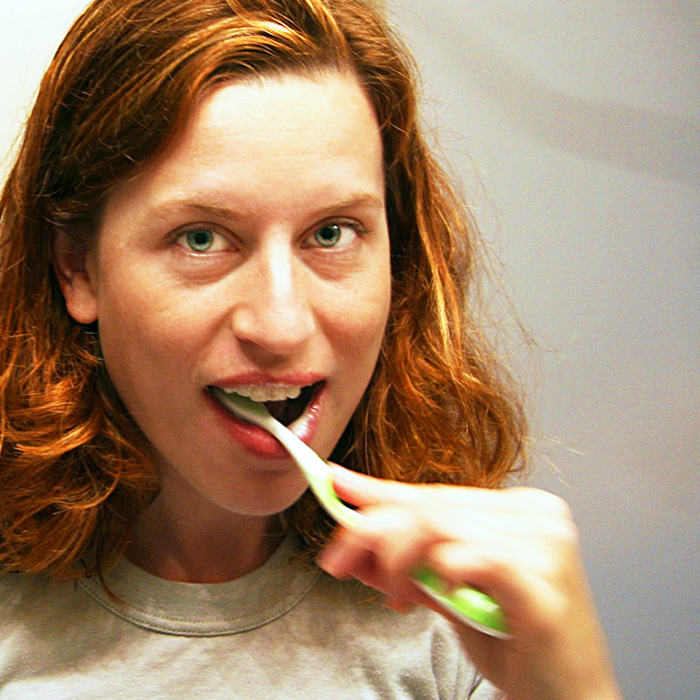
WE’RE SUPPOSED TO BRUSH twice a day for two minutes each time. How many of us actually do that? See how you measure up!

From a recent poll:

49% of men brush their teeth only once a day.

57% of women brush their teeth only once a day.

And, the average person only brushes his or her teeth for 30 seconds each time—not nearly long enough! That’s only one-fourth of the time really needed!

Brush Softer, And Take The Full 2 Minutes

Many choose to brush more vigorously to save time. Although it’s quicker, brushing aggressively can wear down tooth enamel. If you brush harder than needed, remember to brush gently but thoroughly for the full two minutes.

Think About Your Brushing Technique

For the deepest clean possible, brush at a 45-degree angle in small circular motions around all tooth surfaces. One of the biggest places for build-up is around the gum line. If neglected, gums can become swollen and infected because of plaque left behind.

Clean Your Tongue!

The tongue is the biggest bacteria host in the mouth! If you only brush your teeth, the bacteria left on your tongue transfers to your teeth, making them dirty again. Remember to clean every area of the tongue. If you experience a gag reflex when using a toothbrush, consider trying a tongue scraper. A clean tongue helps keep your teeth clean, and it helps keep your breath fresh!

We Love Your Smile

We’re focused on helping your smile look and feel its best! We’re committed to your overall health as well. Remember, brushing twice a day for two minutes each time is a necessity, not a recommendation.

Thanks for reading our blog, and happy brushing!

*Image by Flickr user Taz used under Creative Commons Attribution-ShareAlike 4.0 license. Image cropped and modified from original.